Voices

¿Qué dice la IA sobre tu marca?

4 min leído

Publicado el 25 de mayo de 2026

¿Qué dice la IA sobre tu marca?
Este insight ha sido publicado por Lotus Child, Directora de Experiencia Digital en JAKALA UK

Cómo la IA está cambiando el control sobre la percepción de la marca y qué debes saber sobre ello.


Un potencial cliente llega a una reunión comercial convencido de que tu competencia es la empresa de referencia del sector. Tu equipo le pregunta de dónde ha sacado esa idea. La respuesta: “Se lo pregunté a una IA”.

No leyó ningún artículo. No consultó informes de analistas. Simplemente recibió una respuesta clara y convincente de un sistema que nunca ha hablado con tu equipo de marca… pero que ya está influyendo en cómo se percibe tu empresa.

Esto ya está ocurriendo, en todos los sectores y a gran escala. Muchas organizaciones siguen pensando que controlan la manera en la que los clientes descubren y valoran su marca. Pero esa idea ya no refleja la realidad.

Hoy en día, los usuarios ya no forman una opinión entrando en varias webs o comparando contenidos por su cuenta. Cada vez son más los que delegan ese trabajo en la inteligencia artificial. Y eso convierte a la IA en un intermediario decisivo entre las personas y las marcas que terminan eligiendo.


En pocas palabras…

Los sistemas de IA ya analizan, resumen y recomiendan marcas antes de que exista una interacción directa con el cliente, moldeando de forma silenciosa la percepción que el mercado tiene de ellas 

Y esto cambia muchas cosas. La construcción de marca ya no depende únicamente de tus canales propios o de tus campañas de marketing. Cada vez está más condicionada por sistemas que no controlas, entrenados con señales que probablemente no entiendes del todo y optimizados para objetivos que no siempre coinciden con los tuyos.

La pregunta ya no es si la IA va a influir en cómo se percibe tu marca. La cuestión es si estás trabajando activamente para influir en esa percepción o si, simplemente, estás dejando que otros la definan por ti.

La ventana para construir autoridad se está cerrando

Los sistemas de IA todavía están aprendiendo quién lidera cada sector. Están decidiendo qué marcas consideran fiables, qué voces merecen confianza y qué fuentes pasan desapercibidas. Pero esta situación no durará para siempre: ahora mismo existe una ventana de oportunidad, y cada vez es más pequeña.

Las marcas que consiguen posicionarse pronto dentro de estos sistemas obtienen una ventaja acumulativa. No solo ganan visibilidad; también influyen en cómo se define toda su categoría. Se convierten en el punto de referencia frente al que se compara el resto.

Las empresas que lleguen tarde tendrán que adaptarse a una narrativa que no han construido, aparecerán asociadas a fuentes que no han elegido y serán descritas de maneras que no podrán controlar.

La autoridad que se construye desde el principio se consolida con facilidad. La que llega tarde cuesta mucho más.

De los resultados de búsqueda a la voz que habla por tu marca 

Antes, los buscadores ayudaban a encontrar información. Después empezaron a ayudar a compararla. Ahora, los sistemas de IA están dando un paso mucho más importante: ayudan directamente a tomar decisiones.

En lugar de revisar varias fuentes, los usuarios hacen una sola pregunta y reciben una respuesta resumida y estructurada. Esa respuesta suele incluir recomendaciones, comparativas, ventajas, inconvenientes y próximos pasos. Y, lo más importante, muchas veces se acepta como válida sin necesidad de contrastarla.

En la práctica, la IA se ha convertido en el portavoz silencioso de las marcas, representándolas antes incluso de que tengan la oportunidad de comunicarse directamente con un cliente.

Y esto cambia por completo las reglas del juego. Las marcas ya no compiten únicamente por captar atención en una página de resultados. Ahora compiten por ser interpretadas correctamente por un algoritmo que hablará en su nombre. Y ese algoritmo no entiende de intención de marca ni de posicionamiento; solo interpreta las señales que es capaz de detectar.

zulfugar-karimov-CaRba5ZXJTQ-unsplash

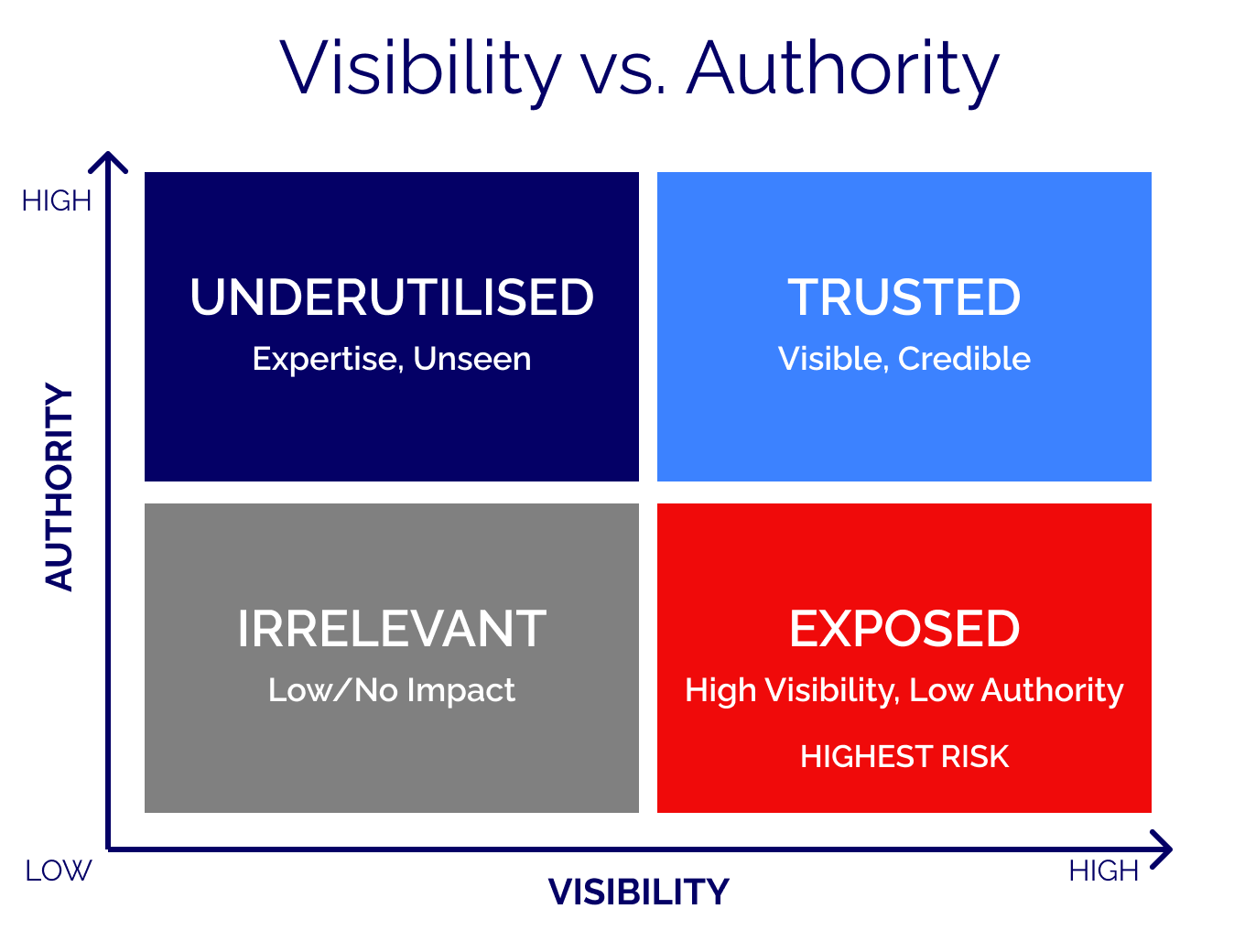
Visibility Is Table Stakes. Authority Is the Game.

Traditional metrics—rankings, traffic, clicks—measure exposure. But AI doesn't optimise for clicks. It optimises for confidence. It cites brands that demonstrate depth, consistency, and clear expertise within a domain.

AI systems prioritise sources that clearly articulate what they know, what they do best, and where they lead. They reward brands that make expertise explicit, not assumed.

You can be highly visible and still lose authority—and authority loss happens before it shows up in your dashboards. By the time traditional KPIs decline, AI has already chosen your competitors as the safer, clearer answer.

Being visible without being authoritative is not neutral. It is a liability.
Visibility vs. Authority

How AI Decides What Your Brand Means 

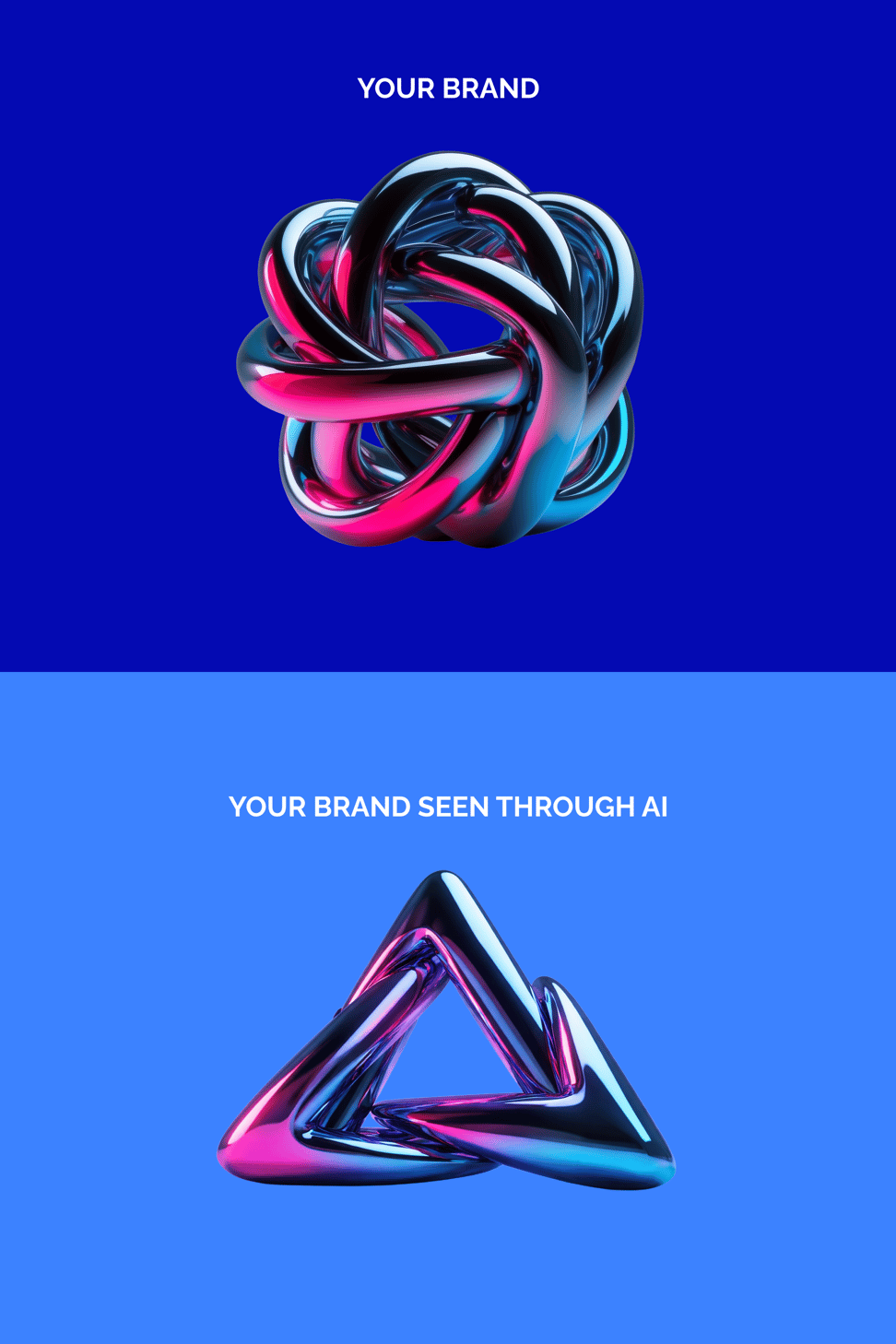
AI doesn't experience your brand the way people do. It doesn't intuit nuance or absorb tone. It pattern-matches: structure, repetition, corroboration, and clarity across dozens of sources it finds, and weighs without your input.

Yes, it pulls from your website, but also from forums, review sites, archived PDFs, LinkedIn posts, and third-party think pieces written three years ago by someone who misunderstood your pivot. It compresses all of this into a single, confident answer that sounds authoritative even when the underlying sources are partial, contradictory, or outdated.

Example: Ask AI to compare enterprise data platforms, and you might find your brand described using positioning you retired two years ago because that language still dominates the corpus. Meanwhile, a competitor who invested in structured, AI-readable content has quietly claimed the language you invented.

If your expertise is implied rather than stated, it may be missed. If your positioning is fragmented across regions or teams, that fragmentation is amplified. And if you leave gaps, AI will fill them—often using sources you would never choose as your brand's representative.

AI doesn't ask what you meant. It infers what you've proven.

When AI Gets It Wrong, It Gets It Wrong at Scale

For large, global organisations, the real risk is not invisibility; it is misrepresentation.

AI systems do not guarantee consistency across markets, languages, or contexts. They may surface different interpretations of the same brand depending on geography, query phrasing, or data availability. Legacy content, outdated positioning, or niche third-party opinions can suddenly carry disproportionate weight.

The result is not a one-off error, but systemic misinterpretation—repeated, amplified, and scaled across thousands of interactions.

This kind of brand drift rarely triggers alarms internally. Yet it quietly reshapes how customers, partners, and even employees understand what a company stands for.

Your Organisation Wasn't Built for This

Most enterprise content and brand governance models were designed for a world where:

  • Humans browsed websites and read pages in sequence
  • Brand consistency meant visual guidelines and approved messaging
  • Content could be gated, updated quarterly, and reviewed by legal before publication

AI breaks all of these assumptions. It synthesises across silos. It interprets intent from structure, not from what you meant to say. It operates 24/7 in every language, pulling from sources you may not even track.

The gap between how enterprises produce brand content and how AI consumes it is widening—and it's structural, not tactical. You can't governance-committee your way out of this. You need systems that operate at AI speed, not meeting cadence.

This is not a failure of effort or intent. It is a mismatch between how organisations work and how AI interprets information.

You Can't Govern What You Can't See

Owning brand authority in an AI-mediated world does not mean chasing every new tool or trend. It starts with visibility: understanding how AI systems currently describe your brand, which sources they rely on, and where inconsistencies appear.

From there, it requires deliberate action:

  • Making expertise explicit rather than assumed
  • Designing content to be interpreted accurately, not just consumed
  • Embedding brand wisdom into scalable systems so it travels consistently across markets and use cases

Humans still matter, deeply. But their role must shift from manual production to strategic oversight, judgment, and calibration. The goal is not to remove people from the loop, but to stop them from being the bottleneck.

Brand Is No Longer Just Expressed. It's Interpreted.

Traditionally, brand has been something organisations express: through campaigns, messaging, and experiences. In the AI era, brand is increasingly something that is interpreted by machines.

AI reads structure, clarity, and consistency. It forms opinions based on how well a brand defines its expertise, boundaries, and perspective. In that sense, your content ecosystem is no longer just a marketing asset—it is part of your brand infrastructure.

If your brand is not designed to be interpreted correctly by machines, it won't be.

The Choice You Have

If AI is increasingly speaking for your brand—interpreting your expertise, summarising your value, and guiding customer decisions—you face a choice:

Own the relationship. Invest in making your brand legible, consistent, and authoritative to the systems that now mediate perception.

Or inherit the interpretation. Accept that your brand will be defined by whatever signals AI finds easiest to pattern-match—even if they're partial, outdated, or shaped by competitors who moved faster.

This is not a question of marketing tactics. It's a question of strategic control.

Authority, established early, compounds. Authority, earned late, is expensive.

The window is open. It will not stay that way.

Final thoughts

Checklist: Is AI Already Speaking for Your Brand?

You don't need to guess whether this shift affects you. If three or more of these are true, AI is already shaping your brand perception:

☐ Prospects arrive with specific assumptions about your capabilities that don't match your current messaging

☐ Sales teams hear "I was told you're best at X" but can't trace the source

☐ Different regions report inconsistent brand perceptions despite shared guidelines

☐ Low-quality or outdated third-party content appears when AI summarises your brand

☐ You're seeing traffic from AI tools, but attribution is opaque

Critical test: Your executive team can't confidently answer: "How does ChatGPT currently describe us?"

If you checked 3+: AI is already interpreting your brand. The question isn't whether to act—it's whether you're willing to act while you still have influence.

If you can't see it, you can't govern it.

Learn more about how JAKALA helps businesses develop their technological capabilities,
with our multidisciplinary, data-driven approach.

Want to discuss?

Lotus Child

Lotus Child

Director of Digital Experience at JAKALA UK, France, Nordics.

Let's talk

Curious about how we can help
you with your projects? 

Reach out to us to have a conversation for your specific needs. 

Perspectivas

Impulsando la conversación sobre el futuro digital: dos encuentros clave en JAKALA
Article

Impulsando la conversación sobre el futuro digital: dos encuentros clave en JAKALA

2 min leído
De la mano de Adobe, JAKALA debuta en el Mobile World Congress mostrando cómo la IA y los agentes inteligentes están transformando la operativa de PRISA
Article

De la mano de Adobe, JAKALA debuta en el Mobile World Congress mostrando cómo la IA y los agentes inteligentes están transformando la operativa de PRISA

3 min leído
JAKALA mejora la plataforma de streaming de ZDF con experiencias deportivas en directo de cara a los Juegos Olímpicos de Invierno
Article

JAKALA mejora la plataforma de streaming de ZDF con experiencias deportivas en directo de cara a los Juegos Olímpicos de Invierno

3 min leído
¿La web está muriendo?
Article

¿La web está muriendo?

5 min leído