
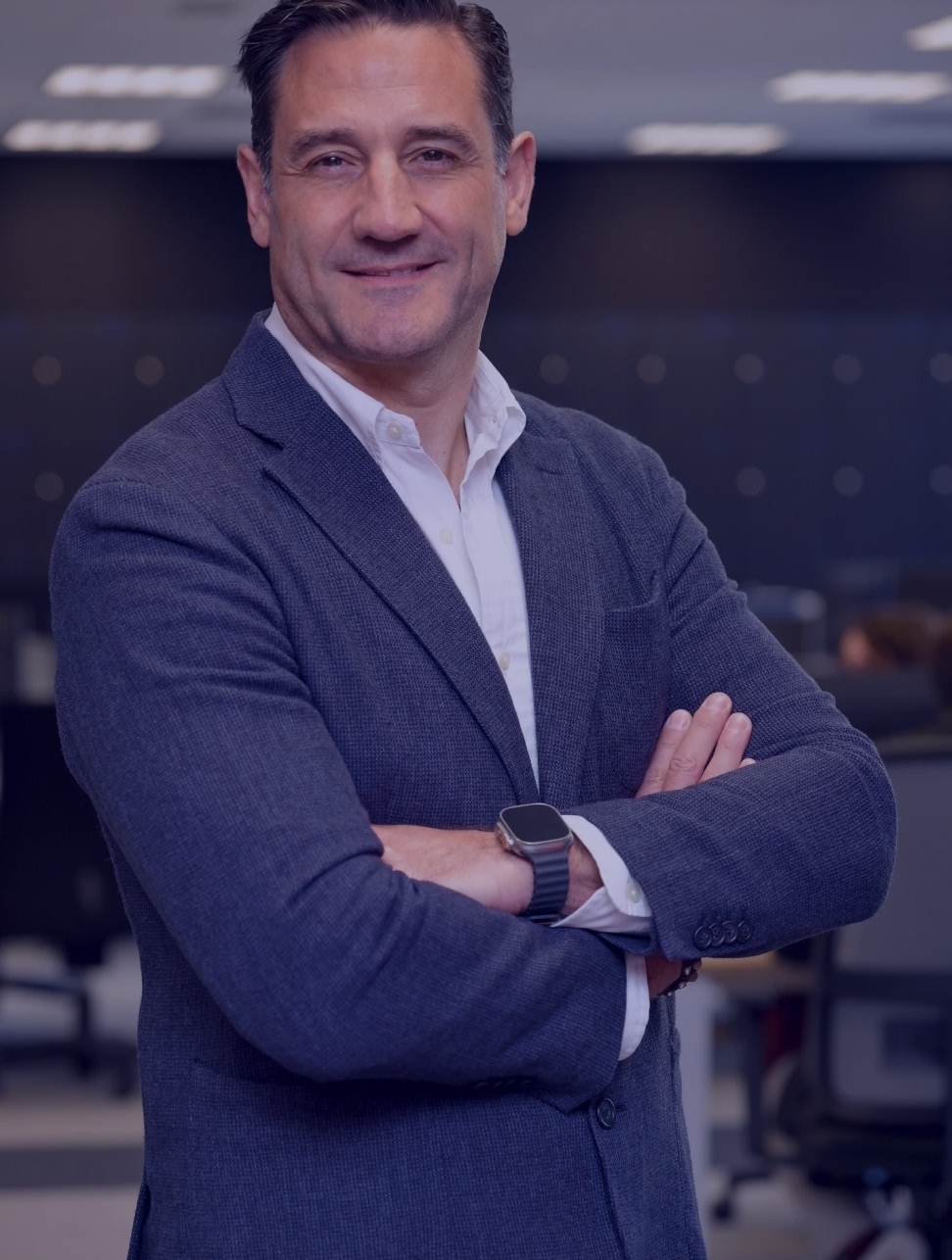
Artificial intelligence is no longer a promise. It is one of the main forces driving business transformation. But for Luis Ferrándiz, President of JAKALA Iberia & LATAM and recently appointed Chief Global Strategy Officer, the real challenge is not adopting new tools. It is preparing organizations for a deep shift in how they work, make decisions and create value.
In this article, Luis shares his view on where AI stands today, the strategic role of data, Europe's chances of competing in the new technology landscape, and how companies like JAKALA help clients turn innovation into tangible results.
AI will transform business, but adoption will be gradual
Luis sees an inflection point. AI is redefining how companies organize, collaborate and make decisions. He believes, however, that adoption will probably be more gradual than the market currently expects.
Today, he explains, organizations are in an early-adopter phase. Large companies are deploying use cases with particularly strong impact in software development and marketing. The real test will come when these initiatives stop being isolated projects and become embedded across the whole organization.
He points to two common mistakes. The first is getting carried away by the hype without prioritizing the use cases that can deliver real business impact. The second is failing to prepare the organization for the cultural and operational change this transformation requires.
Digital transformation forced us to break down silos and become more agile. AI amplifies that operating model.
Turning data into decisions that drive impact
Throughout the interview, Luis stresses that the value of data lies not in having vast volumes of it, but in turning it into decisions that fuel growth.
At JAKALA, being data-driven means using data to improve marketing and sales processes and to translate insight into measurable results, whether through greater operational efficiency or higher revenue.
Many organizations still struggle to get there. In his view, the bottleneck remains twofold: data infrastructure and architecture that are ready to be put to work, and the in-house skills to interpret and use that information effectively.
Talent management is therefore decisive.
If digital transformation already forced us to rethink how we manage talent, AI only makes that need greater.
Strategy and execution: two sides of the same coin
Another theme is the relationship between strategic planning and speed of execution.
For Luis, the two must move together. Strategy sets the direction and the ambition of the organization, while agile execution lets it adapt to a fast-changing market without losing focus.
At JAKALA, he explains, this balance means pairing a clear strategic vision with rigorous execution, backed by capabilities in analytics, customer experience, AI and marketing technology that allow teams to iterate, learn and adjust quickly.
It's not about running faster. It's about removing friction, working with real-time data and making decisions based on evidence.
Europe can lead from its data
Luis also reflects on Europe's place in the global tech race.
He acknowledges that competing head-on with the United States or China in some areas will be difficult. But he sees a distinctive opportunity in the sheer value of Europe's industrial, energy, healthcare, mobility and public-sector data.
The key, he says, is building an ecosystem founded on responsible AI, supported by regulatory frameworks that build trust and encourage adoption among businesses and citizens.
In this scenario, companies like JAKALA play a central role in helping organizations move from pilot projects to AI capabilities at scale, combining technology, data governance, measurement and business knowledge.
Tomorrow's leaders will prioritize and execute
Luis closes with advice for CEOs leading transformation programs: narrow the ambition to a handful of truly strategic initiatives, focus on those that can deliver impact within one to two years, and back them with clear metrics, executive sponsorship and investment in internal talent and skills.
Looking ahead, he expects one of the biggest shifts to be AI moving from an assistant role to a far more active one inside organizations.
The change we are still underestimating is the shift from AI as copilot to AI as operating layer: agents that don't just answer, but plan, execute and orchestrate work in real time. That will change everything.
