-Recovered.webp?width=972&height=1286&name=HERO_INSIGHTS_972X1286%20(1)-Recovered.webp)
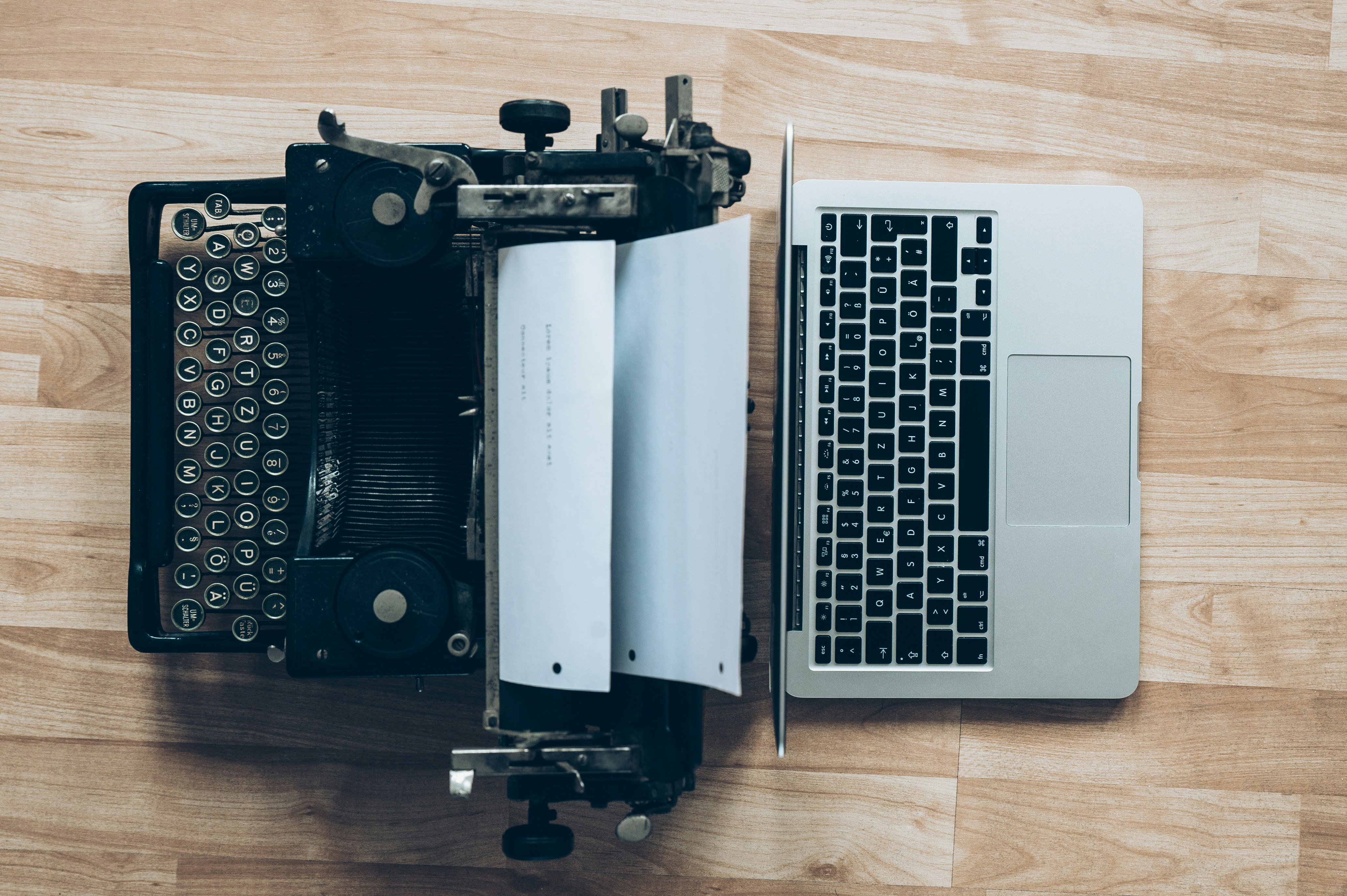
If AI can write your article, your competitor can write it too. That’s the elephant in the room—and if you work in content, you'll have seen this in action. LinkedIn posts, page content, blog content, even social media visuals, it's all starting to sound very alike. The same structures, the same jokes, the same...Everything.
When I got my first professional job, fresh out of university, I was proud to say "I'm a writer!" when someone asked me what I did for a living. Now, I wonder how many young graduates will have the opportunity to say and feel the same.
We’ve entered an era of mass-produced sameness, where blog posts read like they’ve all been spun from the same polite algorithm. This might be helpful, even informative, but it's not exciting or moving, or even provocative. And isn't that what good copywriting should do? Every brand suddenly sounds like every other brand, like we’re all reading from the same '10x your productivity' playbook. And the scary part? We kind of are.
In Content Marketing Institute’s 2024 research, 89% of marketers surveyed said they use generative AI tools, with 44% using them to write drafts.
When everyone sounds the same, no one wins
Copywriters used to have signature styles. Turns of phrase that felt lived-in. A bit of wit tucked between the lines. Now, even the quirks have become clichés — and nowhere is this clearer than with the humble em dash.
Full disclosure: this is a hill I am prepared to die on. The em dash — beloved by writers, is now heralded as a telltale sign of AI-generated content. People point to it and say: "ChatGPT wrote this". But let’s be clear: ChatGPT didn’t invent the em dash — great writers did. Human ones. From Emily Dickinson to Zadie Smith, the em dash has been used to create rhythm, interruption, tension — all the glorious chaos of human thought on the page. If anything, AI picked it up from us.
Personally, I started favouring the em dash when I was chosen for creative writing workshops with an internationally bestselling author and journalist. She taught me to write with more clarity, to edit without mercy, and more than 15 years on, those sessions still echo through everything I write — they shaped my voice.
Now, holding a BA and MA in writing, and accumulating over a decade of experience in content and marketing, you could say I threw myself into this career and investment. However, I do look back and wonder: if I'd had a crystal ball and known this is how AI would go, would I still invest all that time (and money!) in learning the craft so extensively? Or would it seem too futile given the high dependence many businesses have on ChatGPT's out-of-the-box content these days? I hope I'd still do it — and I hope other young aspiring writers do too.
AI as a mirror, not a muse
AI tools are trained on human writing. Every sentence they generate is a reflection — a remix of what we’ve already made. The machine didn’t wake up one day with a brilliant insight about your B2B product — it borrowed patterns from the copywriters who’ve spent years writing, learning, testing, and rewriting it all by hand.
Perhaps the most interesting thing isn’t that 89% of marketers now use generative AI. It’s that 69% still consider its writing output mediocre. We’re adopting AI at extraordinary speed without necessarily believing that what it writes is extraordinary..
So let’s not get it twisted: AI is an incredible amplifier. But it’s not the source. Your original ideas? Those are.
So let’s not get it twisted: AI is an incredible amplifier. But it’s not the source. Your original ideas? Those are.
The best copy, the kind that stops a scroll or earns a save or a smile, doesn’t just inform. It makes people feel something. It provokes. It surprises. And that spark doesn’t come from predictive text — it comes from a person who’s lived a little, failed a little, knows the fresh sting of rejection, and maybe cried in a bathroom after a client presentation. You know — a writer.
Using AI to power (not replace) your copywriting experts
This isn’t an anti-AI rant, far from it. AI is an amazing co-pilot, especially for small or overstretched teams. Used well, it can:
- Speed up the grunt work: Summarise 20 pages of research in seconds. Translate voice notes. Draft social copy options in bulk.
- Unblock your brain: Stuck on a headline? Get 50 variations in a flash and then rewrite the best one to make it your own.
- Test tone and structure: Rewrite a paragraph in different voices and styles, to see what sings.
But don’t confuse the tool for the talent.
The value of your copywriters isn’t just in writing, it’s in thinking. It's in the original idea, the first drafts, and in knowing how to create emotion in just a few sentences. It's in the strategic prompts, and editing to suit the tone your audience responds well to. In making connections and reaching out in a human way. It's having taste. In knowing when to break a rule or when to fight for the wild card headline that actually makes people click. That can’t be automated. And that’s arguably where AI is delivering its clearest value. Among technology marketers, 57% say AI has reduced tedious tasks and 47% report more efficient workflows. But only 33% say it has improved creativity.
There’s the distinction. AI is exceptionally good at giving writers more capacity. That isn’t the same thing as giving brands more creativity...


-1.png?width=600&height=793&name=Insight%20(1)-1.png)
-2.jpg?width=600&height=793&name=Insight%20(1)-2.jpg)
-2.png?width=600&height=793&name=Insight%20(2)-2.png)